Dream Falling: A Bold Script for Modern Creatives
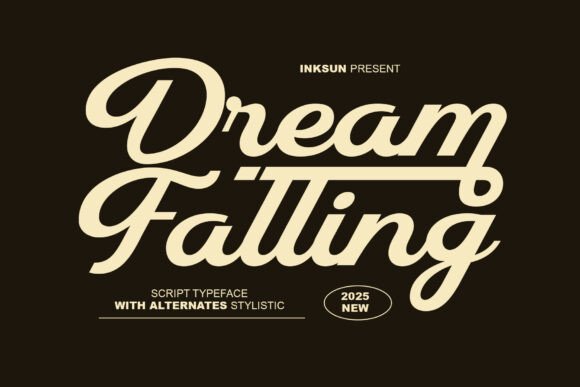
Dream Falling is not just another typeface; it is a sophisticated bold script that masterfully blends retro charm with modern elegance. In a digital landscape often cluttered with sterile, uniform sans-serifs, this font stands out by offering fluid, rhythmic strokes and a heavy weight that exudes a confident yet warm personality. The design features smooth connections and expressive loops, creating a natural hand-drawn aesthetic that feels both nostalgic and fresh.
Whether you are designing a book cover, crafting a brand identity, or simply looking to elevate a blog header, the versatility of Dream Falling allows it to adapt to your specific vision. It captures the essence of handwritten calligraphy while maintaining the structural integrity required for professional print and web applications.
Why This Typeface Matters Across Different Industries
The value of a font like Dream Falling extends far beyond its visual appeal. It serves as a strategic tool that communicates tone before a single word is read. For different audiences, the importance of this typeface varies based on their goals and the stories they need to tell.
For publishers and authors, the priority is often credibility mixed with approachability. A novel or a memoir requires typography that invites the reader in without feeling overly casual. The heavy weight of Dream Falling provides the necessary authority for headlines, while the soft, expressive loops ensure the text remains inviting. It bridges the gap between a classic literary feel and contemporary design trends.
In the realm of branding and marketing, consistency and memorability are key. Small business owners and entrepreneurs often struggle to differentiate themselves in saturated markets. Using a font that feels personal and authentic can humanize a brand. When applied to logos or packaging, Dream Falling suggests a company that values craftsmanship and attention to detail. It signals to the consumer that the product inside is made with care, leveraging the font's "hand-drawn" vibe to build trust.
Evaluating the Font from a Creator's Perspective
Designers and freelancers look at typefaces through a lens of technical capability and creative flexibility. When evaluating Dream Falling, professionals consider how well it integrates into their existing workflows and whether it offers the range needed for complex projects.
- Versatility in Application: The font is perfect for photography portfolios where captions need to stand out against busy images. Its high contrast ensures readability even when overlaid on photographs.
- Stylistic Alternatives: One of the most critical features for experienced users is the inclusion of stylistic sets. These allow designers to swap out specific glyphs to create unique variations of words, adding a layer of customization that standard fonts lack.
- File Formats: Professionals appreciate the comprehensive file support. With Opentype (.otf), TrueType (.ttf), and Web Open Font Format (.woff) included, the font works seamlessly across desktop publishing software, web browsers, and mobile apps.
For bloggers and content creators, the speed of production is often a limiting factor. They need tools that require minimal tweaking to look polished. Dream Falling simplifies this process. A simple headline set in this font can instantly transform a generic layout into a feature-ready design. The multilingual support further expands its utility, allowing global creators to maintain a consistent visual voice across different languages.
Priorities for Beginners and Hobbyists
Not everyone who uses a font is a trained typographer. For beginners, hobbyists, and educators, the primary concerns are usually ease of use, clarity, and the immediate impact of the design. They may not be concerned with advanced kerning tables or OpenType features, but they do care about whether the font looks good right out of the box.
Dream Falling addresses these needs through its inherent legibility. Despite its decorative nature, the fluid strokes are distinct enough to be read easily. This makes it an excellent choice for educational materials, such as worksheets, certificates, or classroom posters, where a touch of creativity is desired without sacrificing comprehension.
Hobbyists who enjoy DIY projects, scrapbooking, or handmade crafts find significant value in the font's ability to mimic traditional calligraphy. It offers the look of a custom brush stroke without the years of practice required to achieve that effect naturally. Whether creating wedding invitations, party banners, or personalized gifts, the font allows non-designers to produce results that look professionally curated.
Practical Examples for Diverse Projects
To understand how Dream Falling fits into real-world scenarios, consider how different users might deploy it:
- The Photographer: A portrait photographer uses the font for the title page of a portfolio PDF. The heavy weight anchors the layout, while the elegant curves reflect the artistic nature of the work.
- The Cafe Owner: A small coffee shop owner designs a menu board. The font adds a cozy, artisanal feel that complements the atmosphere of the cafe, making customers feel like they are stepping back in time to a vintage diner.
- The Educator: A teacher creates a certificate of achievement for students. The font adds a sense of celebration and importance to the document, making the award feel more special than a standard printed sheet.
- The Marketer: A digital marketer creates a social media graphic for a quote post. The font's expressive loops draw the eye immediately, increasing engagement rates compared to standard body text.
Long-Term Usefulness and Technical Reliability
When investing in a typeface, long-term usefulness is a major consideration. Will this font still look relevant in five years? Does it have the technical robustness to handle various output requirements? Dream Falling answers these questions with a strong foundation.
The inclusion of numerals and functional characters ensures that the font is practical for data-heavy contexts, such as pricing lists or statistical infographics. The uppercase and lowercase forms are balanced to work harmoniously together, preventing the jarring shifts in style that can occur with poorly designed scripts.
Furthermore, the support for multilingual character sets means the font is future-proof for businesses looking to expand globally. You do not need to hunt for a different font family when entering a new market; Dream Falling can likely handle the linguistic nuances already. This reliability reduces the friction of scaling projects and ensures brand consistency across borders.
Determining if Dream Falling Fits Your Needs
Deciding whether to incorporate Dream Falling into your workflow depends on your specific project goals. If your aim is to convey a message that is bold, confident, and deeply personal, this typeface is likely an ideal match. However, if your project requires extreme neutrality or strict geometric precision, other options might serve better.
Consider the following questions to evaluate compatibility:
- What is the emotional tone? Do you want to evoke nostalgia, warmth, and creativity? Dream Falling excels here.
- Who is the audience? Is your audience looking for a connection or a quick scan of information? The font is best used for headlines, titles, and short phrases rather than long blocks of body text.
- What is the medium? Are you printing on paper or displaying on screens? The high-quality vector files ensure crisp rendering in both environments.
Ultimately, Dream Falling represents a bridge between the past and the present. It honors the tradition of hand-lettering while embracing the efficiency of modern digital design. By understanding the strengths of this typeface and aligning them with your specific objectives, you can unlock a level of visual communication that resonates deeply with your audience.