Baby Boss: A Sophisticated Script for Refined Branding
In a digital landscape saturated with sans-serifs and geometric grotesques, finding a typeface that commands attention without shouting is a significant challenge. Baby Boss emerges as a distinct solution for designers and brands seeking to inject a sense of chic refinement into their visual identity. Unlike many script fonts that lean heavily into casual handwriting or playful whimsy, Baby Boss is engineered to emanate sophistication and elegance. It occupies a unique niche where luxury meets modernity, offering a polished aesthetic that feels both established and contemporary.
For professionals ranging from marketing directors to freelance creatives, the choice of typography often dictates the perceived value of a project. When evaluating a font like Baby Boss, the focus shifts beyond simple legibility to how well the character shapes support a brand's narrative. This analysis explores the practical application, structural strengths, and ideal use cases for this stylish script, providing an objective look at whether it fits your specific workflow and design goals.
Defining the Aesthetic and Core Characteristics
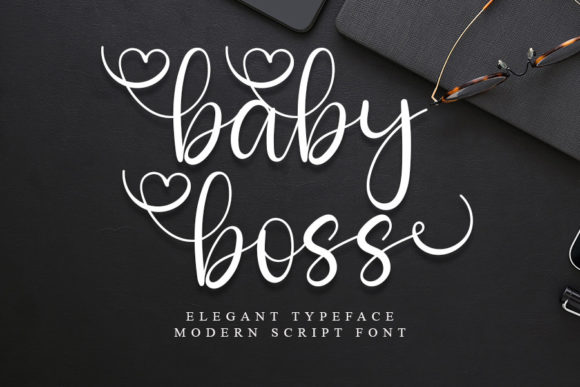
The primary differentiator of Baby Boss lies in its refined execution. While many scripts attempt to mimic the fluidity of a pen on paper, often resulting in inconsistent stroke weights or chaotic spacing, Baby Boss maintains a high degree of control. It features a structured flow that suggests the hand of a calligrapher who has mastered the balance between formality and approachability. The strokes are clean, the terminals are sharp yet graceful, and the overall weight distribution creates a sense of stability.
This font is not merely a decorative element; it is a strategic tool for elevating presentation. Its design philosophy centers on clarity paired with flair. The letterforms possess a natural rhythm that guides the eye smoothly across the text, reducing cognitive load while maintaining visual interest. For projects where tone is critical—such as fashion editorials, high-end hospitality branding, or boutique product packaging—this level of polish is essential. The font avoids the cluttered look common in lesser scripts, ensuring that the message remains the focal point rather than the medium through which it is delivered.
Furthermore, the name "Baby Boss" might suggest a playful tone, but the actual output contradicts this expectation. Instead of childish or lighthearted, the font delivers a mature, authoritative voice. It speaks to an audience that appreciates understated luxury. The characters are designed to hold their own against bold imagery and complex layouts, making them versatile enough for headlines that need to anchor a composition without overwhelming the supporting elements.
Stylistic Alternates and Ligatures
One of the most compelling technical features of Baby Boss is its comprehensive set of stylistic alternates and ligatures. In professional typography, these features are what separate a functional font from a truly dynamic one. Standard scripts often suffer from awkward connections between letters, particularly when certain combinations appear frequently. Baby Boss addresses this by offering curated alternatives that ensure smooth transitions and harmonious spacing.
When utilizing the built-in ligatures, designers can achieve a level of cohesion that mimics custom calligraphy. These pre-designed connections eliminate the need for manual kerning adjustments in many scenarios, saving valuable time during the production phase. For example, connecting pairs like "fi," "fl," or specific vowel combinations can transform a disjointed line of text into a flowing, unified graphic element. The alternates allow for customization within a single word, enabling designers to tweak the personality of the text slightly depending on the context.
This flexibility is crucial for maintaining consistency across various media. Whether the font is being used on a large-scale billboard or a small mobile screen, the ability to adjust the internal structure of the letters ensures that the integrity of the design is preserved. It allows for a tailored approach where the typography adapts to the constraints of the layout rather than forcing the layout to adapt to rigid letterforms.
Practical Performance in Real-World Applications
Evaluating a font requires looking beyond static images to understand how it performs in live environments. Baby Boss demonstrates strong performance in print and digital formats alike, provided it is used within its intended scope. The stroke width is generally moderate, striking a balance between readability and style. In body copy, caution is advised, as scripts are typically best reserved for display purposes. However, for headlines, subheadings, and pull quotes, Baby Boss excels.
In the realm of branding, the font proves effective at establishing immediate hierarchy. A logo or header featuring Baby Boss instantly communicates a premium positioning. This is particularly relevant for entrepreneurs and small business owners who need to compete with larger corporations. By leveraging a font that signals quality, these businesses can enhance their perceived authority. The elegance of the script helps bridge the gap between a startup vibe and an established market leader.
Digital implementation also benefits from the font's clean lines. On high-resolution screens, the details of the alternates are rendered sharply, preserving the intended aesthetic. However, scalability remains a consideration. While the vector nature of modern font files ensures good scaling, extremely small sizes may cause the finer details of the script to blur or become indistinct. Designers should test the font at various resolutions to ensure that the legibility threshold is met for their specific audience.
Consistency and Reliability
Reliability in typography often comes down to consistency across different platforms and file formats. Baby Boss adheres to industry standards, ensuring that the font behaves predictably in major design software such as Adobe Illustrator, InDesign, and Figma. The character sets are well-organized, and the encoding supports standard web-safe practices, facilitating smoother integration into websites and responsive designs.
The consistency of the x-height and baseline alignment contributes to a professional finish. When mixing Baby Boss with other typefaces, such as a neutral sans-serif for body text, the contrast is handled gracefully. The script does not fight against the geometric precision of modern sans-serifs; instead, it complements them. This makes it a robust companion for creating complete typographic systems where multiple fonts must coexist harmoniously.
Target Audience and Strategic Fit
Who benefits most from incorporating Baby Boss into their toolkit? The answer lies with professionals who prioritize aesthetics and brand perception. Marketers working in the lifestyle, beauty, and fashion sectors will find this font particularly resonant. These industries rely heavily on visual storytelling, and Baby Boss provides a vocabulary of elegance that aligns perfectly with those narratives.
Freelancers and agencies serving clients in the luxury space also stand to gain significantly. The font offers a ready-made solution for clients who want to convey exclusivity without resorting to clichéd serif fonts. It allows creators to deliver high-value work efficiently, reducing the time spent searching for the perfect typeface. For educators and publishers creating course materials or books on creative subjects, Baby Boss adds a touch of class that can elevate the perceived educational value of the content.
However, the font is not a universal fit. It is ill-suited for contexts requiring maximum accessibility, such as legal documents, medical information, or data-heavy reports. The decorative nature of the script, while beautiful, can impede rapid reading in dense blocks of text. Furthermore, industries focused on technology, engineering, or industrial manufacturing may find the ornamental qualities of Baby Boss too soft for their hard-edged subject matter.
Navigating Limitations and Best Practices
To maximize the utility of Baby Boss, users must adhere to strict usage guidelines. Overuse is the primary pitfall. Using the script for entire paragraphs or long-form articles will quickly fatigue the reader and obscure the message. The strength of the font lies in its ability to highlight key phrases, titles, and short statements. Treat it as a spotlight rather than a floodlight.
Color and background contrast also play a vital role in its effectiveness. Because the font contains fine lines and intricate details, low-contrast backgrounds can cause the text to disappear. High-contrast pairings, such as dark script on light backgrounds or white script on deep colors, ensure that the elegance of the design is fully realized. Additionally, pairing Baby Boss with a highly readable, neutral font is recommended to create a balanced visual hierarchy.
Long-term value is another consideration. Trends in typography shift rapidly, but classic elegance tends to endure. Baby Boss draws inspiration from timeless calligraphic traditions, suggesting that it will remain relevant for years to come. This longevity makes it a sound investment for building a lasting brand identity. As long as the design strategy focuses on clarity and sophistication, Baby Boss will continue to serve as a reliable asset in any creative arsenal.
In conclusion, Baby Boss represents a thoughtful addition to the typographic landscape. It successfully merges the artistic flair of a script with the structural discipline required for professional design. For those willing to use it with intention and restraint, it offers a powerful means of communicating refinement and style. Whether for a new startup logo or a rebranding campaign for an established firm, the font provides the necessary tools to make a sophisticated statement in a crowded marketplace.