Calvin: Elevating Modern Brand Identity with the Perfect Monoline Script
In an era where digital saturation often leads to visual fatigue, the design industry is witnessing a significant shift towards authenticity and organic expression. Consumers are no longer just looking for information; they are seeking connection, warmth, and a human touch in their interactions with brands. This cultural pivot has created a fertile ground for typography that bridges the gap between professional polish and personal creativity. Enter Calvin, a modern monoline script font that is rapidly becoming a cornerstone for designers aiming to infuse their work with elegance without sacrificing readability.
As we navigate a landscape defined by rapid technological advancement and evolving consumer expectations, the tools we choose to express our vision become critical. Calvin is not merely a typeface; it represents a response to the growing demand for designs that feel curated yet effortless. By understanding the specific nuances of this font, professionals, creators, and entrepreneurs can better align their visual strategies with current market trends.
The Anatomy of Elegance: What Makes Calvin Unique?
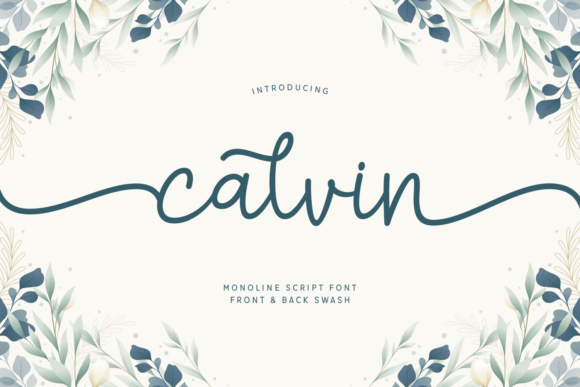
To truly appreciate the impact of Calvin on contemporary design, one must first look at its structural composition. Unlike traditional scripts that rely heavily on variable stroke widths to create drama, Calvin embraces a monoline approach. This technique ensures that the line weight remains consistent throughout every character, resulting in a clean, minimalist aesthetic that feels both modern and timeless.
The defining characteristic of Calvin lies in its elegant front and back swashes. These decorative flourishes are not arbitrary additions but are carefully engineered to provide a perfectly polished finish. They guide the eye smoothly from one letter to the next, creating a sense of continuous movement. This smooth, continuous flow mimics the natural rhythm of handwriting, yet retains the precision required for high-quality digital and print applications.
In a market crowded with fonts that either feel too rigid or overly chaotic, Calvin strikes a delicate balance. Its balanced weight makes it easy to read even at smaller sizes, while its stylistic flair ensures it still feels personalized and creative. This duality is essential for today's multi-channel marketing strategies, where a single brand asset must perform equally well on a mobile screen and a physical product package.
Aligning with Current Market and Creative Trends
The rise of Calvin coincides with several broader developments in the creative and business sectors. One of the most prominent trends is the move towards "soft branding." In a corporate world that often leans heavily into stark minimalism and sans-serif dominance, there is a growing appetite for warmth. Brands across various industries are realizing that a touch of class can make them appear more approachable and trustworthy.
- The Wellness and Lifestyle Sector: As consumers increasingly prioritize mental health, wellness, and self-care, the visual language of these industries is shifting. Calvin's organic nature makes it an ideal candidate for lifestyle blogs, yoga studios, and holistic health practitioners who want to convey calmness and sophistication simultaneously.
- Sustainable and Organic Products: The demand for eco-friendly and organic goods has surged. Packaging for these products often requires a font that suggests purity and natural ingredients. Calvin's smooth strokes evoke the feeling of something handcrafted, reinforcing the narrative of quality and care that resonates with conscious consumers.
- The Wedding Industry: Weddings remain a massive driver of typographic trends. Couples are moving away from generic templates toward unique identities. Calvin offers the perfect blend of formality and romance, allowing wedding stationery to stand out while maintaining the legibility necessary for guest information.
Furthermore, the workflow of modern creatives has changed. Designers are often working remotely, collaborating across time zones, and delivering assets in multiple formats quickly. A font like Calvin, which maintains its integrity across different media, reduces the friction in the production process. It eliminates the need for complex kerning adjustments that often plague other script fonts, allowing freelancers and agencies to deliver polished results faster.
Bridging Technology and Human Connection
We live in a digital-first environment where artificial intelligence and automation are reshaping how content is produced. Paradoxically, as technology becomes more pervasive, the value of human-centric design increases. People crave experiences that feel authentic and unscripted. Calvin serves as a bridge between the cold efficiency of digital interfaces and the warmth of human interaction.
For entrepreneurs and marketers, leveraging a font like Calvin is a strategic decision. It signals to the audience that the brand cares about details. When a logo, a social media post, or an email newsletter utilizes the gentle touch of class provided by Calvin, it creates a subconscious association with quality and attention to detail. This psychological impact is vital in building brand loyalty.
Consider the scenario of a small business owner launching an organic skincare line. The packaging needs to communicate trustworthiness and efficacy. By using Calvin for the product name, the brand immediately sets a tone of luxury and care. The front and back swashes add a layer of sophistication that elevates the perceived value of the product, potentially justifying a higher price point in a competitive marketplace.
Practical Applications for Professionals
The versatility of Calvin extends beyond just headlines. Its minimalist style allows it to function effectively in various contexts within a comprehensive design system. For instance, in web design, Calvin can be used for hero text to capture immediate attention, while the body copy remains in a highly readable sans-serif font. This contrast creates a dynamic visual hierarchy that guides the user through the content seamlessly.
In the realm of editorial design, Calvin shines when used for pull quotes or section headers. The natural flow of the letters breaks up dense blocks of text, making the reading experience more engaging. For book covers, particularly in genres like romance, memoirs, or self-help, the font adds a layer of emotional resonance that straight-edged typefaces cannot achieve.
Freelancers and graphic designers should also note the importance of consistency. Using a font that has a distinct personality helps in establishing a cohesive brand identity. When clients see their materials unified by a font like Calvin, they perceive the designer as thoughtful and strategic. This perception is crucial for retaining clients and securing referrals in a competitive freelance market.
The Future of Typography in a Changing World
Looking ahead, the role of typography will continue to evolve. As augmented reality and immersive technologies become more mainstream, the way we consume text will change. However, the fundamental human desire for beauty and clarity will remain constant. Fonts that offer a blend of functionality and artistry, such as Calvin, will likely become even more valuable.
The trend towards personalization suggests that brands will increasingly seek ways to differentiate themselves. Customized typography is one avenue, but utilizing high-quality pre-existing fonts that offer unique characteristics is another. Calvin provides a ready-made solution for those who want to avoid the cost and time of custom lettering while still achieving a bespoke look.
Moreover, the accessibility of high-quality design tools means that non-designers are often tasked with creating visuals. A font like Calvin, which is forgiving and aesthetically pleasing even when used imperfectly, empowers a wider range of creators to produce professional-looking work. This democratization of design contributes to a richer, more diverse visual culture.
Conclusion: A Strategic Choice for Modern Designers
In summary, Calvin is more than just a font; it is a tool for effective communication in a visually noisy world. Its modern monoline structure, combined with elegant swashes, addresses the specific needs of today's market. Whether you are designing wedding invitations, packaging for organic products, or a lifestyle blog, Calvin offers the flexibility and polish required to succeed.
By incorporating Calvin into your design toolkit, you are aligning yourself with a forward-thinking approach that values both aesthetics and usability. As the lines between digital and physical blur, and as consumers demand more authentic connections, having a typeface that embodies these qualities will be a significant advantage. For professionals, creators, and entrepreneurs alike, Calvin represents a gentle yet powerful way to elevate their craft and connect with their audience on a deeper level.
Embracing the smooth, continuous strokes of Calvin is an investment in the quality of your visual storytelling. It is a choice that speaks to the enduring power of good design to inspire, inform, and delight.