Fiostina Typeface: A Balanced Evaluation for Romantic and Elegant Design Projects
In the vast landscape of digital typography, finding a font that successfully bridges the gap between casual warmth and sophisticated elegance is often a challenge. Many designers struggle to find a typeface that feels personal without sacrificing readability or professional polish. This is where Fiostina enters the conversation. It is not merely a collection of letters; it is a romantic and sweet calligraphy typeface designed with characters that dance along the baseline. For professionals aged 20 to 50 who are evaluating design resources for specific emotional impacts, understanding the unique mechanics and applications of Fiostina is essential.
Unlike rigid geometric sans-serifs or overly ornate blackletter scripts, Fiostina occupies a distinct middle ground. Its defining characteristic is its movement. The glyphs do not sit statically on an invisible line; instead, they follow a gentle, undulating path that mimics the natural flow of handwriting. This creates an immediate sense of approachability and joy. When you select this typeface for a project, you are choosing a tool that inherently communicates intimacy and celebration. However, before committing to this resource, it is crucial to evaluate how it fits into broader design categories and what tradeoffs might exist compared to other script options.
Distinguishing Characteristics and Visual Mechanics
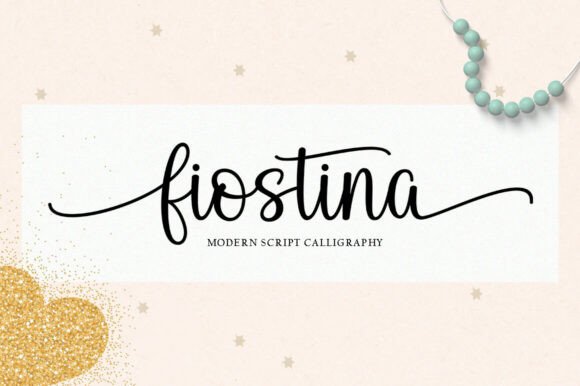
The primary differentiator of Fiostina lies in its baseline behavior. Most standard fonts align characters to a straight horizontal axis, providing stability and order. In contrast, the characters in Fiostina appear to sway slightly, creating a rhythm that guides the eye across the text in a fluid motion. This "dancing" effect is what gives the font its signature casual yet elegant touch. It avoids the stiffness often associated with formal calligraphy while retaining the artistic flair of hand-lettering.
This visual mechanic makes the typeface particularly effective for conveying emotion. When used in headlines, the slight variation in vertical positioning adds a layer of personality that static fonts lack. It suggests that the message was written by a human hand, fostering a connection between the brand or event and the audience. The strokes themselves are smooth and rounded, lacking the sharp angles found in modernist scripts. This softness contributes to the overall "sweet" aesthetic, making it ideal for content that aims to be welcoming rather than authoritative.
Evaluating Fit: Ideal Use Cases and Applications
Understanding where Fiostina shines requires looking at specific scenarios where emotional resonance is more important than strict structural uniformity. The versatility of the typeface allows it to span various mediums, but certain applications leverage its strengths better than others.
- Wedding Invitations and Event Stationery: This is perhaps the most natural home for Fiostina. The romantic nature of the script complements the sentimentality of weddings perfectly. Whether used for the main invitation title, RSVP cards, or menu labels, the dancing baselines add a whimsical charm that traditional serif fonts might miss.
- Branding and Logos: For businesses centered around lifestyle, beauty, crafts, or personal services, a logo set in Fiostina can instantly signal a boutique or artisanal quality. It works well for small business logos where a human touch is a selling point.
- Apparel and Merchandise: On t-shirts and tote bags, the font's legibility remains high even at smaller sizes, provided the text isn't overly dense. The casual vibe pairs exceptionally well with streetwear brands aiming for a relaxed, fun aesthetic.
- Editorial and News Headings: While less common for hard news, Fiostina excels in lifestyle magazines, food blogs, or feature stories about culture and travel. It breaks up the monotony of body text and draws attention to sidebars or pull quotes.
- Signage and Labels: For coffee shops, bakeries, or craft stores, signage created with this font invites customers in. The elegance ensures the establishment doesn't look unprofessional, while the playfulness prevents it from feeling stuffy.
In each of these contexts, the decision to use Fiostina is driven by the desire to evoke a specific mood. If the goal is to communicate efficiency, speed, or corporate seriousness, this typeface would likely be a poor fit. But if the objective is to create a memorable, warm experience, the benefits become clear.
Comparative Analysis: Script Fonts and Design Alternatives
When researching typefaces, designers often compare options within the same category. Script fonts generally fall into two camps: formal cursive styles that mimic fountain pen ink, and casual brush or marker styles that look like quick handwriting. Fiostina sits somewhat uniquely in a hybrid space.
Compared to formal cursive scripts, which often feature heavy swashes, high contrast between thick and thin lines, and complex ligatures, Fiostina is significantly more restrained. Formal scripts can sometimes feel intimidating or difficult to read at scale. They demand careful kerning and often require a dedicated designer to handle spacing correctly. Fiostina, by contrast, offers a more forgiving structure. The "dance" of the baseline is subtle enough that it does not compromise readability, making it accessible for users who may not have advanced typesetting skills.
Conversely, when compared to casual brush scripts that prioritize raw energy and irregular stroke widths, Fiostina offers more consistency. Brush scripts can sometimes look chaotic or messy if not paired with ample white space. Fiostina maintains a cleaner geometry beneath its playful surface. This makes it a safer choice for projects that need to remain legible across different media, such as small print on packaging or mobile screens.
Another comparison point is the modern sans-serif. Many designers consider pairing a script font with a clean sans-serif to balance the layout. In this context, Fiostina acts as the perfect counterweight. Its organic curves soften the rigidity of geometric shapes. However, unlike some scripts that clash aggressively with sans-serifs due to their complexity, Fiostina integrates smoothly because of its moderate weight and simple terminal forms.
Tradeoffs and Limitations in Professional Contexts
No single typeface is a universal solution, and acknowledging the limitations of Fiostina is vital for informed decision-making. The very features that make it charming can also pose challenges in specific environments.
The first limitation involves text density. Because the characters move up and down the baseline, setting large blocks of paragraph text can result in a "jittery" appearance that strains the reader's eye. The rhythmic movement that looks delightful in a headline becomes distracting when sustained over long passages. Therefore, Fiostina is best utilized for display purposes—titles, captions, and short phrases—rather than body copy.
A second consideration is legibility in low-contrast settings. The delicate nature of the strokes means that the font may lose definition when printed on textured paper or displayed on low-resolution screens. If a project requires high visibility from a distance, such as highway signage or emergency instructions, a bolder, more robust typeface is necessary. The sweetness of Fiostina can get lost in harsh lighting conditions or when viewed from afar.
There is also the factor of brand perception. While the font is versatile, it carries a strong connotation of femininity, romance, and leisure. Brands attempting to project ruggedness, industrial strength, or technological innovation might find the association with "sweetness" to be a liability. In these cases, the emotional tone of the font could undermine the intended message.
Making the Decision: When to Choose Fiostina
Deciding whether to incorporate Fiostina into a project comes down to aligning the visual language with the communication goals. If your project requires a voice that is inviting, personal, and celebratory, this typeface is a strong candidate. It is particularly valuable for events, gifts, and lifestyle branding where the relationship with the viewer is paramount.
However, if the priority is absolute clarity, neutrality, or scalability across diverse industries, you may need to explore alternatives. There are many excellent options available that offer similar elegance without the baseline movement, or alternative scripts that provide a different kind of energy. The key is to test the font in context. Mockups are essential to see how the "dance" interacts with your specific imagery and color palette.
In conclusion, Fiostina represents a thoughtful addition to the typographic toolkit. It solves the problem of needing a script that feels authentic without being overly ornate. By understanding its strengths in creating emotional connections and its limitations regarding text density and brand tone, designers can make confident choices. Whether used for a wedding invitation that sets the tone for a special day or a label that adds character to a product shelf, Fiostina offers a blend of casual charm and refined style that resonates with audiences seeking a touch of humanity in their digital and print experiences.