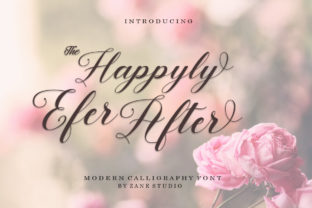
Happyly Ever After: A Modern Script for Playful Storytelling
In a digital landscape saturated with rigid grids and predictable sans-serif typography, finding a font that balances whimsy with structural integrity is a challenge many designers face. Happyly Ever After emerges as a distinct solution for those seeking to inject personality without sacrificing readability. This playful and romantic new modern script font is not merely a decorative element; it is a functional tool designed to convey emotion through its unique irregular baseline and thoughtful character set.
The primary allure of Happyly Ever After lies in its departure from the mechanical perfection found in standard typefaces. By introducing an irregular baseline, the font mimics the natural flow of human handwriting, creating a sense of movement and organic rhythm. This characteristic makes it particularly effective for projects requiring a personal touch, such as wedding invitations, lifestyle branding, or creative blog headers. It bridges the gap between a casual doodle and a professional design asset, offering a versatility that appeals to a wide range of professionals, from freelancers to small business owners.
Key Characteristics and Design Philosophy
When evaluating Happyly Ever After, one must look beyond surface-level aesthetics to understand the mechanics behind its construction. The font's defining feature is its variable baseline. Unlike traditional scripts that sit on a straight line, this typeface undulates slightly, creating a visual cadence that feels alive. This irregularity prevents the text from looking static or robotic, which is often a pitfall in digital typography where legibility can suffer if the eye cannot easily track the line of text.
The design also incorporates specific beginning and end letters. These alternate glyphs are crucial for maintaining the illusion of continuous handwriting. When used correctly, they allow the font to start and stop naturally within a sentence or at the end of a paragraph, enhancing the narrative quality of the content. For marketers and creators, this means the font can guide the reader's eye more effectively than a uniform typeface, subtly emphasizing the emotional weight of the message.
Beyond the baseline and alternates, the font includes a comprehensive set of ligatures and alternative characters. These features ensure that letter combinations do not clash awkwardly, preserving the fluid connection typical of cursive writing. The inclusion of support for multiple languages further expands its utility, making it a viable option for global campaigns or international brands that require consistent styling across different linguistic regions. This level of localization support is often overlooked in novelty fonts but is essential for serious commercial applications.
Practical Value in Real-World Applications
The true test of any typeface is how it performs under real-world constraints. Happyly Ever After demonstrates strong performance in medium-to-large sizes, where its stylistic flourishes can be appreciated without compromising clarity. In web design, it serves exceptionally well as a display font for headlines, pull quotes, or call-to-action buttons. Its romantic and playful nature makes it ideal for industries focused on wellness, events, fashion, and artisanal goods.
However, practical application requires strategic restraint. Because of its high visual interest, Happyly Ever After is generally unsuitable for body copy or long-form text. Using it for extended paragraphs can lead to reader fatigue, as the irregular baseline disrupts the scanning pattern most users employ when reading digital content. Instead, the font shines when paired with a clean, neutral sans-serif or serif font. This pairing strategy allows the script to act as an accent, drawing attention to key information while the supporting typeface handles the heavy lifting of information delivery.
For educators and publishers, the font offers a unique opportunity to make educational materials or children's books more engaging. The handwritten feel reduces the perceived barrier to entry for complex topics, making learning materials appear more approachable. Similarly, entrepreneurs and small business owners can leverage this font to build a brand identity that feels authentic and human-centric, distinguishing themselves from competitors who rely on sterile corporate aesthetics.
Usability, Flexibility, and Reliability
Evaluation of Happyly Ever After reveals a high degree of flexibility regarding usage scenarios. The inclusion of binding features and extensive character alternatives provides designers with the tools to customize the output significantly. Whether adjusting the spacing for a tight logo lockup or expanding the tracking for a banner headline, the font responds well to manipulation. This adaptability is critical for professionals who need to maintain consistency across various media channels, from social media graphics to print collateral.
Reliability is another cornerstone of its value proposition. The file structure appears robust, ensuring that the font renders consistently across different operating systems and browsers. This technical stability is vital for web developers and publishers who cannot afford rendering errors or missing glyphs. Furthermore, the multi-language support indicates a commitment to accessibility and inclusivity, allowing users to communicate with diverse audiences without switching typefaces mid-project.
Despite these strengths, there are limitations to consider. The playful nature of the font may not align with every brand voice. In sectors like finance, law, or healthcare, where trust and authority are paramount, Happyly Ever After might undermine the seriousness of the message. It is essential to assess the audience's expectations before selecting this typeface. If the goal is to project stability and precision, a more traditional font would be a safer choice. However, if the objective is to evoke joy, creativity, or intimacy, this script is a powerful ally.
Who Benefits Most from Happyly Ever After?
The ideal user of Happyly Ever After is someone who understands the power of typography to influence perception. Freelance graphic designers will find it useful for client projects requiring a custom, handcrafted look without the time commitment of actual lettering. Bloggers and content creators can use it to establish a recognizable visual signature for their posts, fostering a deeper connection with their readership.
Small business owners in the creative economy—such as boutique shopkeepers, event planners, and crafters—will appreciate the font's ability to elevate their marketing materials. It adds a layer of sophistication to what might otherwise be generic templates. Additionally, educators and curriculum developers can utilize the font to create worksheets, certificates, and presentation slides that feel less formal and more inviting.
For serious hobbyists and DIY enthusiasts, the font provides a professional-grade resource that enhances the quality of their personal projects. Whether designing a family reunion invitation or a scrapbook layout, Happyly Ever After offers the polish needed to make a project stand out. The variety of alternatives ensures that even non-professionals can achieve a balanced and aesthetically pleasing result.
Long-Term Value and Strategic Considerations
Investing in a font involves considering its longevity and relevance. Happyly Ever After strikes a balance between trendiness and timelessness. While it captures the current appetite for organic, imperfect designs, its core functionality remains grounded in solid typographic principles. This suggests that it will remain relevant for years, rather than fading quickly as design trends shift.
The comprehensive feature set, including beginning and end letters and language support, contributes to its long-term value. Users do not need to purchase additional packs or switch to a different font to accommodate new requirements. This efficiency saves time and resources, making it a cost-effective choice for growing businesses and evolving projects. The font's ability to support multiple languages also future-proofs it against expansion into new markets.
In conclusion, Happyly Ever After is a compelling addition to any designer's toolkit. Its irregular baseline, romantic flair, and robust feature set make it a versatile choice for a wide array of applications. While it requires careful selection based on context and audience, its potential to enhance communication through visual storytelling is undeniable. For professionals seeking to add warmth and personality to their work without compromising on quality, this modern script offers a reliable and effective solution.
By integrating Happyly Ever After thoughtfully into your workflow, you can create designs that resonate emotionally and engage users on a deeper level. Whether used for a wedding suite, a brand campaign, or a personal blog, the font brings a distinctive charm that elevates the overall presentation. As with all design decisions, the key lies in understanding the project's goals and leveraging the font's strengths to meet them effectively.